| Project Activities |
|
 |
Questionnaires' Results, Documentary, Forums
Within the joint project “Young women are building bridges for EU the project partners distributed about a 600 questionnaires among students in Middle East Technical University METU/Ankara, Sofia University “Saint Kliment Ohridski” and the University of Nimes. The results were summarized by the Turkish partner organization and presented during the three forums in the three partner countries. More
The documentary, prepared within the project, presents the opinions of the students from the universities in Ankara, Sofia and Nimes on the following questions asked by the reporters:
- Are there any provisions in the national legislation that guarantee gender equality and do you think they are effective?
- Are you informed how and to what extend gender equality is guaranteed in Bulgaria, Turkey and France?
- Do you think that the EU membership guarantee more gender equality?
- What is your opinion about the candidature of Turkey for EU membership?
A number of forums in Ankara, Sofia and Nimes gathered young students to inform them with the results of the inquiries and interviews, carried out by the partner organizations - CWSP (Bulgaria), CEDIF (France) and the project coordinator Flying Broom (Turkey). The interviews that had been shot in the three universities demonstrate young people’s knowledge and awareness on gender issues within the context of the EU enlargement process.
More about the forums:
Ankara Forum
METU, 20 April 2006
Sofia Forum - I
Sofia University, 18 May 2006
Sofia Forum - II
New Bulgarian University, 19 October 2006
Nimmes Forum
Vauban University, 17 November 2006
Ankara Final Forum
METU, 21 December 2006
The brochure, prepared by the project partners summarizes information on the project, partner organizations, chronology of the EU commitments to gender equality, affirmative measures and financial support for promoting gender equality in EU, the integration process of Bulgaria, the candidature of Turkey and the membership of France in the Union as well as contact information.
|
|
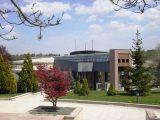
Ankara Forum
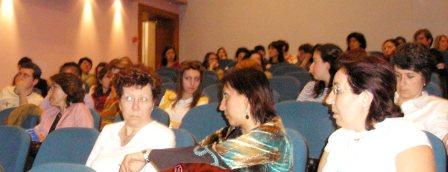
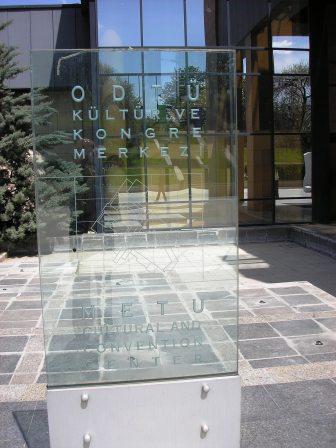
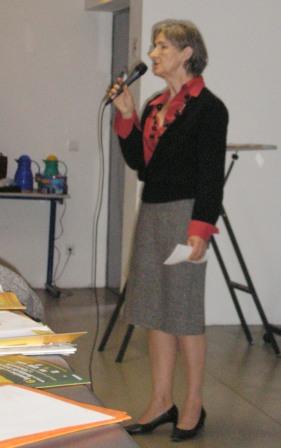
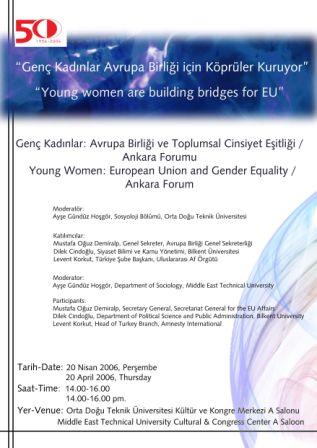
The first forum was held on 20-th of April 2006 in Ankara. 120 students, women NGOs, professors and official guests met in the Cultural Center of METU. The Ankara Forum presented for first time the documentary with interviews shot in the Universities’ campuses, reflecting the young students’ point of view on national legislation and policies on gender equality in the three countries and the role of the EU for adoption and effective appliance of the national legislation that can guarantee equal opportunities for women and men. The film shows the student’s opinion on the prospects for the candidacy of Turkey for EU membership and its positive influence on gender equality in Turkey.
The Ankara Forum provided an excellent opportunity for discussions about feminism in Turkey and chances women NGOs to cooperate and work jointly on improving gender equality in Turkey.
|
|
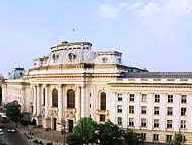
Sofia Forum - І
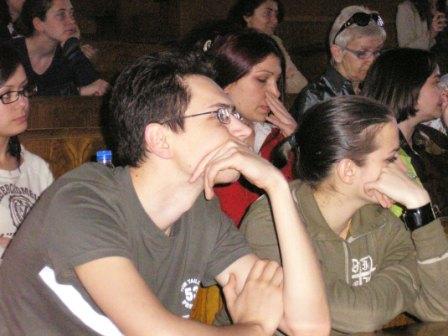
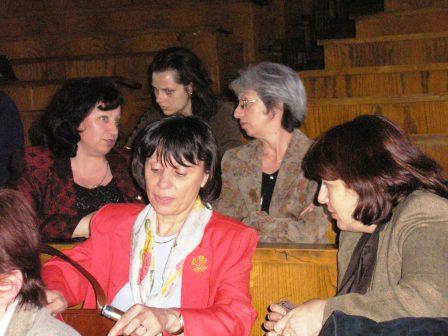
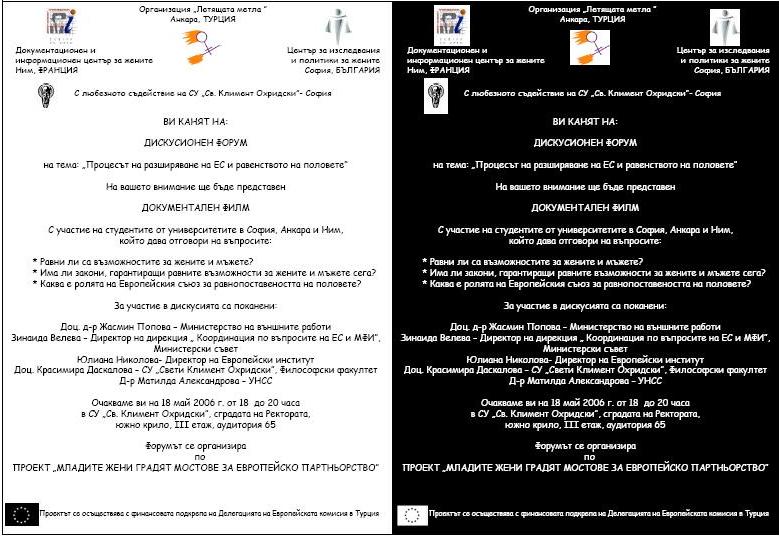
On the 18-th of May 2006 in Auditorium 65 at St Kliment Ohridski University of Sofia was held the Discussion Forum: ”Gender equality in the context of the EU Enlargement Process”, organized by the Center of Women’s Studies and Policies under the project “ Young women are building bridges for EU partnership”.
The forum was attended by Mrs. Fulya Yucekok, third secretary in the Embassy of Republic of Turkey, the MP Mrs. Marusia Lubcheva, member of the sub-committee on Women’s Rights and Gender Equality at the National Assembly, Mrs. Juliana Nikolova – European Institute Director, Mrs. Jasmin Popova, representative of the Ministry of Foreign Affairs, Mrs. Liliana Valcheva – president of the “Higher Education and Science” National Trade Union, NGO representatives, professors from the Center for Eastern Languages and Cultures to the Sofia University, students from Sofia University, New Bulgarian University, Technical University, University of National and World Economy and representatives of the Bulgarian Association of University Women.
The conference was opened by the project partner’s representatives Mrs. Sibel Astarcioglu and Mrs. Selen Dogan from Flying Broom and Mrs. Odille Sabatier from CEDIFF who informed briefly the audience about their organizations and project activities in Bulgaria, Turkey and France and their initial interest on this project as well as on their expectations how the project will contribute for the awareness raising of young people on gender equality.
The documentary shot under the project was shown to the forum participants. The film includes the opinions of students from the three countries regarding their national legislations and policies on their implementation as well as the candidacy of Turkey for EU membership.
The forum ended with a presentation of the inquiry results conducted by the partner organizations on the level of awareness of young people regarding equal opportunities for women and men in Bulgaria, Turkey and France. See the presentation of the results in pdf format:  results_presentation_en.pdf (517.64 Kb) results_presentation_en.pdf (517.64 Kb)
The final conclusion of the forum was that young people in Bulgaria have no information on the national legislation on gender equality in their own country. They have no objective knowledge on the EU enlargement process and they are neither familiar with our neighbor country – Turkey, nor with France. As a result of the forum, the project partners found it necessary to develop the direct contact with students in Bulgaria and use the tools, prepared under the project, as a comprehensive method for raising gender awareness not only in Sofia where the inquiry was held but also in the country. Thus, the multiplying effect of the project will be achieved easily and more people will be informed about the project results.
|
|
Sofia Forum - II
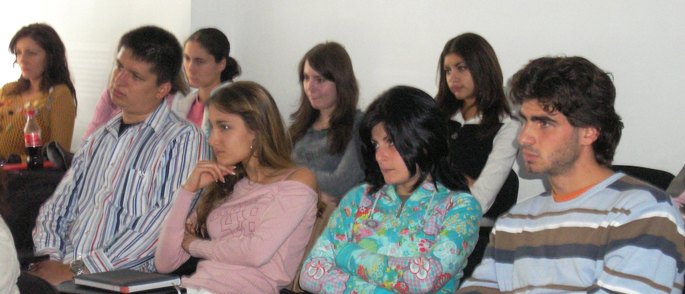
On the 19 of October 2006, Center of Women’s Studies and Policies organized a second forum in Sofia, named “European Union and gender equality” in cooperation with the New Bulgarian University, Department of Political Sciences within the framework of the activities under the Politization and Democratization Seminar. The event has been announced at the official website of the University.
The aim of the forum organizers was to continue the discussion on the Enlargement of the European Union and Gender Equality, held on the 18 of May 2006 at St. Kliment Ohridski University of Sofia and to present the results of the joint project Young Women are Building Bridges for EU Partnership to more young people in Bulgaria.
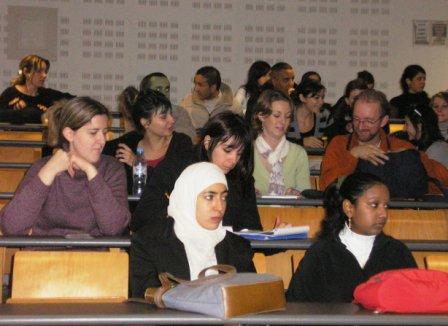
A second but more important goal was to have a discussion in a smaller group, consisting of 30 students in order to stimulate a more active debate and to apply the methodology of the non-formal education on human rights, which aims at increasing the empowerment of young people in decision-making process.
The results of the inquiries, carried out under the project and the documentary shot in the three universities in Sofia, Ankara and Nimes were presented to the students, and then they were given the floor for expressing their opinions.
Overcoming gender stereotypes and changing the mentality need time and depend on the cultural characteristics and the traditional values of the society. The patriarchal traditions are still very strong in Bulgarian society and changing them should be a natural process, was the opinion of the predominant group of the students. They discussed the role of the media, the education system and the family for influencing the change of young people mentality. issues like the unbalanced gender representation in politics, the low representation of women in high-level positions, the difficulties to overcome the so-called glass ceiling and the pay gap were a natural continuation of the discussion between the students.
Some of them were interested to debate the phenomenon of gender competition and the conflict situations, which arise as a result in their private and professional life. A few examples when women consciously are passive in their personal development were presented by students to illustrate some old-fashioned ideas for the role of women in Bulgarian family.
Sex discrimination at the work place and admission quotas for boys and girls for the universities were also hot topics for discussion.
The positive result of the discussion was the possibility for students to put questions to their opponents of the same age and to the lector and to find together answers trough the open debate.
Students from the New Bulgarian University agreed that according to the documentary and the inquires held under the project, it is obvious that young people have stereotypical ideas for the religions and the cultures they do not know well. They are not informed enough about them and this is the reason to be negative or to underestimate their specific features. Students do not know much about young people from the neighboring Turkey or France but some of them considered that the religion should not be a serious barrier for the European people’s alliance. The European Union, according to their views, is mostly an economic and political union and religion should not be the leading factor for consideration of the new countries candidatures for EU. It is true that new members put new challenges for the European Union but it is also true that its development should envisage an appropriate target movement.
Participants in the discussion expressed the opinion that the positive effects of the Bulgarian accession to the EU would result in a long term transition period and smooth transformation of the people’s mentality. However, they were optimistic for the advantages of the accession mainly for the young generations. To meet the requirements for membership and to harmonize the national legislation with the European policies and legislation is of high importance, but it is also important to keep the national identity, was the main outcome of the last part of the discussion. The students from the Political Sciences Department thought that the whole society should be included at the earliest stage of the law making process in order to contribute for effectiveness of the legislation and its relevance to national realities.
At the end of the 60 minutes discussion forum most of the students agreed that the process of Bulgaria integration in the European family had already gained speed and requires more young people are active citizens to be interested in the decision making process at national and European level, in order to achieve successful democratic development.
|
|
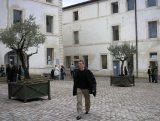
Nimes Forum
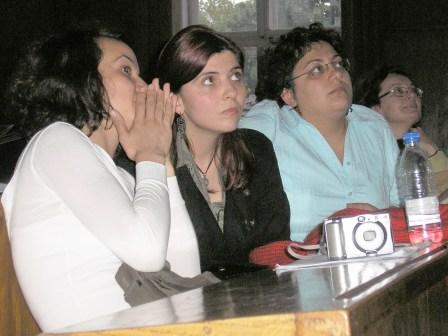
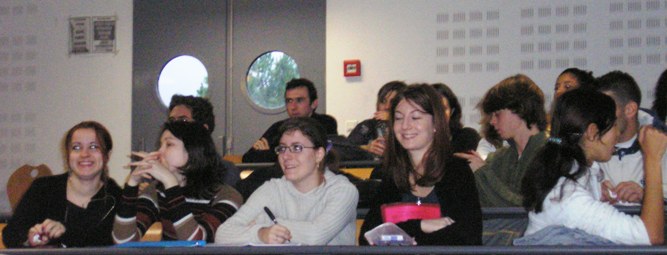
On the 17 of November 2006 at Vauban University of Nimes (Southern France) was held the fourth forum under the joint project, named “Young Women are Building Bridges for EU”. The forum was held within the framework the International University Cooperation and Solidarity Week, organized between 13 and 17 of November 2006 in the universities of Montpellier, Perpignan and Nimes.
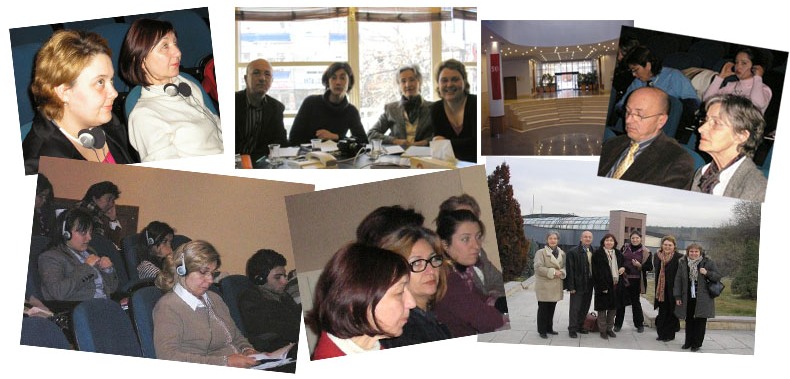
The forum, organized by CEDIFF (France) was attended by the representatives of the partner organizations – CWSP (Bulgaria) and Flying Broom (Turkey), students and professors from the University of Nimes, as well as by representatives of the Delegated Ministry of Social Cooperation and Parity and the Parity and Professional Equality Mission to the Ministry of Transport and Tourism. Social workers, journalists and representatives of nongovernmental organizations from the region of Languedoc-Roussillion also took active part.
The participants of the forum were informed about the already performed project activities and achieved results. The documentary, shot under the project and a presentation of the inquiry results conducted by the partner organizations were shown and the floor was given to the participants for opinions and discussions.
The main discussion topic in France, as well as in Bulgaria and in Turkey, was that obviously there is still a need for change of the young generations’ mentality. A common fact for the three countries is that students prefer not to speak about their private lives. They do not comment their intimate partnerships and this is one of the most important fields where questions should be raised openly. Living in non-wedded partnership or in marriage should be seen as an equal allocation of duties and responsibilities in the common household and an opportunity to start overcoming gender stereotypes were some of the comments of the NGOs representatives. France is one of the founders of the EU but this fact is not of high importance as far as gender equality is concerned, commented the media representatives. There is still a lot to be done regarding women’s career development as well as their personal free time. There is still a tendency for young generations to follow standards and roles in their private lives established by their mothers and fathers, especially in marriage. Breaking stereotypes in private life is a precondition to overcome stereotypes existing in the public life and it should start as soon as possible. More visible and active participation of women in politics and representation in high level positions is more and more supported by French society. An example for that was given by students with the victory of the candidate for President Segolene Royal (Socialist Party) at the preliminary elections, announced on the same day – 17 of November 2006.
The forum’s organizers gave the excellent opportunity to the participants to watch the Paul Zadjerman film “Women start to meddle with…” presenting the history of French feminism movement. The film discusses the women’s roles of good mothers and wives and at the same time of workers, their fight for rights to decide on how many children to have, when to start their professional carrier and how to use their leisure time.
The film puts the accent on the most commonly used gender stereotypes in French society and naturally provokes discussions on the change of mentality and the role of the family and the education system. Most participants agreed that gender equality education programs should be included at all levels of formal education. Feminization of the education sphere and the influence of women teachers on the boys’ school development was the other aspect, discussed by the participants.
Stereotypes and consumer oriented thinking impede democracy, was the opinion of the representative of the organization European House of Montpellier (Maison de l’Europe de Montpellier). He added that the results of the inquiries showed that young people were not concerned much of topics out of their every day life. They should be much more open to discuss subjects related to legislation and policy making which will help the promotion of democracy in France and will add value to gender equality legislation. However, it is a matter of fact that there are few young people who know the national legislation and consider this effective. Some examples that the newly enacted legislation on the right to choose the family name in France is not really applicable were given by the students.
The participants in the forum agreed on the important role of the executive power for the promotion of the newly enacted legislation. They agreed on the importance of public consultations before the adoption of amendments in gender equality legislation.
The students from the University of Nimes agreed that there are few well informed people on the evolution and mechanisms of the EU legislation and policies’ influence on the national gender equality legislation. However it is of high importance for them to have the possibility and access to information on their daily problems related to discrimination and gender inequality. In this respect Mrs. Christa Dumas, representative of the Mission on Gender Equality, based in the Paul Valerie University in Montpellier presented a pilot project financed by the European Social Fund (ESF). As a result of the project the Mission was created to give consultations to students at the university, to investigate possible solutions of conflict situations between the university administration, students and professors. One of its key objectives is to collect statistics and make surveys on the scope of inequalities, the sexual abuse and the prostitution of young people in France. The Mission organizes regular information and prevention campaigns against sexual abuse and sexism. In 2005, the Mission received funds from the University of Montpellier on the grounds of a regional agreement engaging the local government’s to act together for the promotion of equality of boys and girls and women and men in the education system. As a result of similar projects, financed by the ESF a network of research centers based in Montpellier, Toulouse, Tours, Lion, Lilles and Reims was established to collect statistics and make surveys and assist the effective lobbying of women NGOs in the region.
|
|
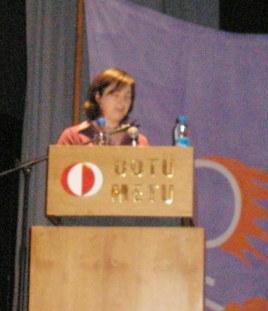
Final Forum in Ankara
On the 21 of December 2006 in the Cultural Center of Middle East Technical University in Ankara, Turkey was held the final forum under the joint project named Young Women are Building Bridges for EU Partnership. The forum was opened with a slide show, named Harmony of Colors which presented historically the Anatolian women’s achievements in the field of science, art, public and political life and some facts about the efforts of the women’s organizations for the adoption of gender equality legislation in Turkey.
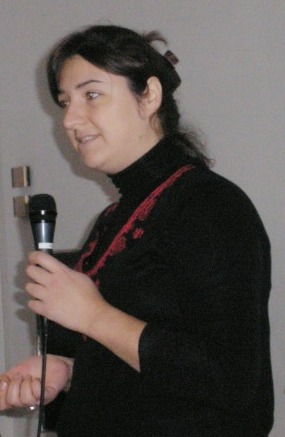
The partner organizations – Center of Women’s Science and Politics, Bulgaria, Documentation and Information Center for Women (CEDIFF), France and the project coordinator Flying Broom (Uçan Süpürge), Turkey presented the joint project phases. The moderator of the meeting – Ms. Selen Dogan, talked about the aim of the project and its activities. Ms. Urun Guner, coordinator summarized the results of the forums held in Ankara, Sofia and Nimes and the main conclusions from them.
On behalf of the Bulgarian partner, Ms. Roza Dimova (coordinator for CWSP) reviewed the main stages of the European integration process and the national gender equality policy and integration, Ms. Magdanela Delinesheva talked about the political representation of women and the efforts of women’s networks in Bulgaria, and. Mariana Draganova, Ph.D., Senior Research Fellow from the Institute of Sociology of the Bulgarian Academy of Sciences, presented the results of two sociological surveys on rural women and women entrepreneurs.
The guests from France shared their experience from the joint work with the partners from Turkey and Bulgaria. Géraldine Despaty presented the organizational structure of the Documentation and Information Center for Women (CEDIFF) and its activities. Nicole Kizik emphasized that the joint project among the three countries built a real partnership for knowledge, education and active citizenship. Michel Clemente talked about the good practice from the project of the University of Montpellier III for encouragement of gender equality, financed by the European Social Fund.
A survey on the history and structure of the feminists’ organizations in Turkey was presented by Ayse Gonulu, a Ph.D. student at METU and member of the research team
The main conclusions of the partners were that:
-
The joint work for the project implementation was an excellent opportunity for the partners to establish strong partnership relations and to share best practices between them for successfully continuing the on-going debate on gender equality issues in the three countries, which are at different stages of their EU integration process.
-
Although the different cultural and socio-political realities in the three countries, the partners did their best to convey the most important messages of the project, aiming at raising the awareness of young people on gender equality issues.
-
The forums in Ankara, Sofia and Nimes were examples for the cooperation of the NGO sector, university professors and students in the initiatives dedicated to extend common knowledge and experience.
-
The partners’ joint work within the 10 months project gave them the extraordinary possibility to learn a lot from each other and to improve the methodology of the non-formal education on human rights and find suitable approaches to young people in order to attract their interest to gender equality issues.
-
The project gave the partners a chance to discover the multicultural diversity and start building bridges between generations, traditions and challenges of the present and the values of the Western and the Eastern cultures by using the direct contact, the new technologies and visual arts.
The partners expressed their hope to continue their work for:
- Including gender equality programs at all levels of the formal educational system.
- Establishing missions based in the universities and the schools for direct work with young people.
- Doing more researches and surveys on identification of the young people’s problems related to gender inequalities, sex discrimination, sexism and prostitution and improving their expertise for providing direct consultations and services for conflicts resolution.
- Implementing more joint projects on raising the awareness on gender equality issues and stimulating young people’s active citizenship.
- Facilitating the joint efforts of the executive power and NGOs for the implementation of the gender mainstreaming principle in all policies and programs at national level.
- Establishing more operational networks of organizations at national level working on gender equality as well as maintaining long term partnerships at European level.
On closing the meeting the hosts once again expressed their hope for further extending the established fruitful partnership.
|
|
Materials and Presentations
Materials, prepared under the project:
Information brochure:brochure_EN.pdf (310.64 Kb)
Presentations from the Forums:
Questionnaires’ results:results_presentation_en.pdf (517.64 Kb)
|
|