Turkey: Right from the heart – how Mamak women changed their lives
These women’s stories are about one of the most important projects of the Contemporary Woman and Youth Foundation called “Women for Women” (January 2004 – October 2006), financed by the Matra Programme of the Dutch Ministry of Foreign Affairs, and how it changed their lives by making them more skilful and educated and self-confident in their own abilities.
Satı HAN, Job Counsellor at the Contemporary Women and Youth Foundation & Manager of Kadınelinden
“I live in Mamak, Ankara and I have been participating in the activities of the Contemporary Women and Youth Foundation for 8 years. This is how I learned about the MATRA project. What did this project give us? Up to me, many things… The way of my life shifted, I began to contribute to my household, learned not only how to earn money but also what earning your own money mean.
When I first heard of the project, I said to myself: “I want to become a job counsellor”. Thus, throughout the project, I always had a goal in mind: to help the women who were willing to work. This project was a golden opportunity to me.
I had been working as a volunteer at the Foundation and acting in the theatrical company of it before the project. However, this was something completely different. It was a significant achievement for a life time housewife to accomplish this. This was my goal and I could no way miss this opportunity that I suddenly found in between my hands.
Within the project’s framework, first I received self-confidence / empowerment training, then the job counselling training. For the job counselling internship first we went to Netherlands. My work life actively began after the internship.
What I have been doing as a job counsellor? We needed to find employment for the women, who had passed the training. Thus, we, as the job counsellors, conducted a job market analysis in the Mamak neighbourhood first and then in the various districts of Ankara. While conducting this survey, I interviewed the employers and tried to figure out what kind of qualifications of their employees they need and through which channels they reach their employees.
Moreover, I found jobs for the women who had received training in the areas of house and office cleaning, child and elderly care, and care for sick people in the houses of the families who applied to the foundation. By the end of this work, performed by the whole team, we managed to find jobs for 147 women, which is quite a number. In fact, that number was even higher. However, many women had no option but to quit their jobs as they had difficulty in finding a reasonable day care service. Those women asked us to start up a day care centre. This is why we opened up a day care centre which can serve 50 children. The women who had received training on that area are going to be the partners of this childcare centre. Meanwhile the project is going to invest 50% of the start up capital. Thus, in addition to 14 women who had started up their own businesses, 6 more women are going to build up their businesses.
This project made me to look at my future in much confidence. I developed my interpersonal skills. My greatest joy in this life is being able to work in an area that I do adore and being able to motivate other women.”
Solmaz Kantar, Job Counsellor at the Contemporary Women and Youth Foundation, partner in Kadınelinden with two colleagues
“I learned about the Contemporary Women and Youth Foundation by the agency of a friend of mine. Before, I was a retired civil servant. However, I have never lost my enthusiasm to work. I wanted to continue to work even after my retirement but without somebody beside me, I didn’t have the courage to take the first step. This project encouraged me in that sense and I got back into harness again – with an even more active role.
With the mediation of the Foundation, I participated to the MATRA Women for Women Project, financed by Dutch Government. Through the beginning phase of the project, I received self – confidence/empowerment training which I needed to become eligible to actively and solidly launch into the business life as well as into the society. Even though I had a work experience, I strongly believe that those courses enriched me a lot.
Following this training, I received counselling and entrepreneurship trainings. Upon the termination of these trainings, I attended to an internship program in Turkish and Dutch Labour Placement Offices, through which I became qualified to guide the women who participates to our trainings with the aim of being employed in the end. This stands as a clear demonstration of the reliability and seriousness of the MATRA project.
When I compare my ex-business life with the current one, I see a huge gap in between. When I was working as a civil servant, I was tiring as well; however, I wasn’t enjoying any of the unique feelings I do experience nowadays. What I strongly believe is that; to encourage a woman, who had been isolated from the society, to launch into life can never be compared to anything else.
Moreover, through that project, I experienced many first of my life. For example, for the first time in my life I found an opportunity to go abroad and to meet various people from many different cultures. For the first time in my life I appeared on the television; for the first time in my life I participated to a radio broadcast; and above all, for the first time of my life I became the boss of my own business, the business that we started with the colleagues of mine. All of these are the “firsts” through which I transferred my life into a much precious form. Thanks to that project I changed radically. Now, I feel my legs and believe that I have a steady, reliable and prestigious position in the society and in the eyes of the others. I also think that I serve as a role model to the women who lack the courage to step into the business life.
At the end, I would like to thank to all who mediated for me to get in touch with this MATRA project as well as to my colleagues with whom we walked side by side in this inspiring path.”
Fatma Baş, cook assistant in the Kadınelinden restaurant
“I learned about this project from my elder sister when she was visiting us. Then I attended the MATRA project meeting, in which I learned what this project was about to give to us as women. I figured out that those issues what had been discussed were crucial for me.
Before the self confidence training provided in the Project, I used to lack self confidence; used to isolate myself from the society and any kind of social activities with in the society; and used to be uninformed of my rights as a woman living in that society. However, thanks to the self confidence training that I received, I better learned of myself. I overcame being a steady introvert. I realized my preciousness. I figured out that I also had an important position within the society.
I had never been in front of many people before. However, they had picked me to make a speech in the certificate ceremony at the Foundation. Even though I said that it was impossible for me to perform this, my daughter encouraged me a lot and constantly repeated: “You can achieve this, mum”. I stepped on the stage as a speaker and received a huge applause at the end of my speech. My teachers paid complements to me and congratulated me a lot.
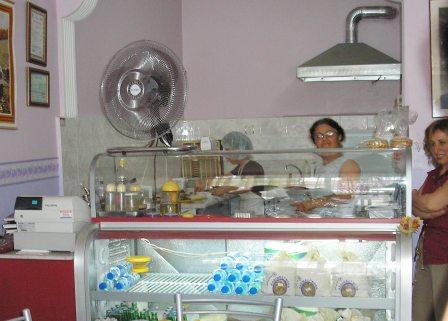
The level of my self confidence rose sharply. Then, I received entrepreneurship training within the project’s framework. Among the vocational training options provided, I preferred cooking courses. I learned many different recipes. I obtained certificates from all. Then, when I was running the canteen of a university entrance course, they offered me a position as a cook assistant in the Kadınelinden restaurant, which had been established by 3 women who received a support from the Project. I gladly accepted this offer.
I have been working in Kadinelinden for 4 months. Through this opportunity, I learnt how to do different things, ranging from cooking to customer relations. This is something to me. Kadınelinden is a professional enterprise which operates significantly well. Starting from the 3rd month, the restaurant started to earn profit. This early success encouraged all of us. Now, we are discussing to enlarge our restaurant. Moreover, I am glad that I can contribute to my household economy.”
Zarife Demirci, Stroopwafel Factory
“Zarife had a very difficult childhood – born in a poor village, early death of the father, early leaving school and start to work. Then, after getting married she moved to Ankara, managed to complete her education and had a good job as well as a family with 2 children. At the age of 31 she lost her husband and moved back to her family in the country where she soon retired. She decided to return to Ankara for the education of her children but had to quit job because of medical problems. However, she did not give up – after months in hospital, she came back home and started to baby sit as soon as she felt better. Here is her story about a meeting that changed her life.
One day, on my way to the supermarket, I changed my direction and came by the Foundation. There, they told me about the MATRA project and then invited me at the first meeting of the project. I liked the idea of the project very much and decided to participate. I passed self confidence/empowerment training, then job counselling, empowerment and cooking trainings respectively. Since I was retired, I have always been very keen on starting up my own business, however, all by my own; I could never find enough courage. Not only financially – I had many concerns of failure. However, adding up the experience and knowledge that I gained through those trainings to the unique support of the Foundation made me quite courageous.
I have to admit that, it was difficult for me to decide what to start up. Following the entrepreneurship courses, we attended meetings in which we discussed what was feasible and what was not. We discussed not only the hot spot business fields but also the way of handling the market. Those meetings were quite beneficiary for me to see beyond the clouds. Thus, I decided to focus on the food sector, producing a typical Dutch bakery called “stroopwafel”. The reason beyond my decision was the uniqueness of the business in Turkey as well as the market of this product.
More than anything, my motivation had been my desire to run my own business. My children were grown up and they no longer required my care. Moreover, I have always wanted to produce. I came together with 5 other participants of the project that I haven’t known before and we started up our own business. Starting from the early establishment and feasibility research of the company I have travelled so many places (like OSTİM, GİMAT, Kızılay, GOP), I have done so many meetings that I have to admit I had never dreamt of this far. The most incredible thing I have ever experienced was an inner journey actually. By the first months of my business, I was quite panicked to give interviews. I was worried of people’s reactions when I asked them if they are interested in my product – the delicious stroopwafels. However, experiencing people’s reaction to my story, to my business and to my product; observing how helpful they have been trying to be, how interested they were, helped me not only to overcome my fear but also to become much more motivated.
I met many people and became friends with many of them. I saw that, as soon as one is keen to achieve something, people are ready to help. In this entire struggle, I was very glad to have the people at the Foundation by me and they opened up many locked doors when I needed. I believe it would have been one’s own foolishness not to use so many opportunities, provided just for us.
For sure I encountered many obstacles as well. However, what I learned is no mountain is high enough! Nowadays, our biggest problem is about marketing. We have a product which is completely unknown to the Turkish market. This is why, first we spent months to publicize our product in the street selling stands that we built in front of the movie halls, university festivals and in various bazaars.
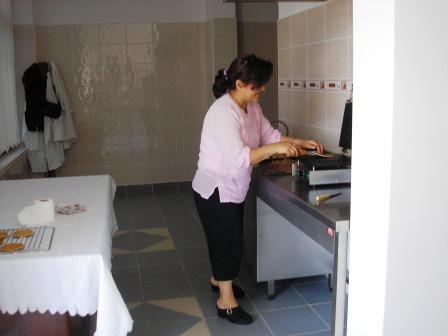
Presently, we have regular orders from Hilton Hotel in Ankara and various cafés located in the upper-middle class neighbourhoods. We glad to receive calls from café owners to whom either our brochure or our product have reach. Meanwhile, we had we provided our first mass productions for ABNAmro Bank, Istanbul and then to the Dutch Embassy in Ankara. There is no word to express my pleasure and proud when we pack and deliver our hand made products. The feeling of producing rather then just consuming at home can never be compared to anything else. This is something that can not be described but needed to be experienced.
I should say that all my acquaintance, especially my family – my daughters, my sisters and brothers, my relatives – and my neighbours supported me a lot. They encouraged me a lot. However, I need to state that, the biggest support came from the Foundation.”
LOOKING IN THE FUTURE
Özlem ÇALIT
“I was born in Divriği, Sivas on 09 July, 1980. I lived in Divriği until 1991. In 1991 I moved to Ankara with my family and finished the child development department of the Vocational High School for Girls.
I worked in the day cared centres for two years and then married in 2001. I learned about the Contemporary Women and Youth Foundation in 2006. Thanks to the guidance and assistance provided by the job counsellors I participated in the vocational training for knitwear and entrepreneurship courses. My dream has always been to start up a knitwear business. In the end of my entrepreneurship training and with the support and guidance of the job counsellors, I applied for the microcredit provided by Mamak Social Solidarity Foundation in the framework of the “Project for Diminishing the Social Risk”
Now I am planning to enrich the knitwear that I produce with jewellery, so I participated to the jewellery designing courses, organized under the MATRA project. My aim is to further develop myself as much as possible. If my credit is approved, I am planning to open up a shop in which I can sell various ready wear clothes as well as my own products.”
Senem Karadağ
“I learned about the Contemporary Women and Youth Foundation from a friend of mine who advised me to come and meet them. Here I received self-confidence/empowerment and entrepreneurship training, within the framework of the MATRA Project. Furthermore I received “job guidance and counselling training” provided by the professors of the Ankara University. This training helped significantly to transfer my relation with my family and with my environment into a more positive manner. I would like to express that I do benefit from this useful training.
Following these trainings, I started working as a job counsellor at the Foundation. Through this job, I meet many people, at different ages; coming from various backgrounds; and suffering from different problems. I witnessed many women struggling to gain their economic independency, even though they are not so very young any more. This showed me that women needed their economic independency at any age. Women proved this statement not only by getting jobs but also by starting up their own businesses.
Throughout the project, I gained a unique job experience via the team work during the project management and implementation. I am deeply convinced that, these work experience will have a very positive effect on my career development.”
Hülya Cevherçit
“I was born in Ankara, in 1973. I completed my primary school education and high school education Ankara. I was married in 2000. I have a son, at the age of 4.
I couldn’t find an opportunity to work after I got married. I put on weight by time. Moreover, I wasn’t as active as I used to be. These problems caused more serious problems like lack of self confidence and shyness. I started to feel like I was detached from all kind of connections and I was hanging in the air – aimless and hopeless. Then I heard of those courses. My child was 3 years old by that time and moreover, a day care service was provided during the courses. I thought this opportunity could be beneficiary for me and also for my child. Further more, in the end, I could find a job and work.
First of all, I had self confidence training within the Project. Then I received entrepreneurship training. Following these two trainings, I was so self confident that I made up my mind about starting up my own business after conducting the necessary research. Thanks to the financial contribution of the project, those dreams became even more solid to me.
Meanwhile, in the framework of the project, trips were organized for us to learn about many different businesses. Among all we visited, the glass mosaic workshop exited my interests to the highest pitch. I thought I could also run a workshop like that. It seemed quite profitable to me. Thus, I applied to have courses and worked there for 2 months. I learned about the business and then I began to a natural stone applications course. I worked there for 1 month in which I learned how to do fine work with marble like natural stones. I made the necessary pre-research, learned the market prices, and built up my network.
The only qualifications that I lacked were designing on the computer and applying this design on the exteriors of the buildings. Thus, I began to the AutoCAD (architectural drawing) courses given for free by the Municipality. The fist stage is about to terminate this week, after 3 months of training. The advanced courses for 3 dimensional drawing are going to start by September. Moreover a free mosaic course will also be provided by September. I will take both of these courses. Those courses will go on for 8 months. The reason why I take all those courses is my desire to produce with zero mistakes when I start up my own business. This is how I am going to differentiate myself as women doing this male job!
Meanwhile, to utilize many good opportunities it provides, I want to open up my workshop before the MATRA project terminates. I am preparing my feasibility analysis with the assistance of the job counsellors. What I hope is to open up my workshop as soon as my feasibility analysis is ready.”
Zehra Keçeli
“I participated in the MATRA project all by chance. I had been a housewife for years and my only job was to take care of my child. I had neither a proper education nor a profession. However, my friend and I were planning to have “beauty and skin care” courses. Then we learned that we could get a certificate approved by the Ministry of Education through the courses at the Foundation. Fortunately, that day, the 2nd meeting of the MATRA project was organized in the Foundation. In that meeting we learned about the aim of the project. My friend and I were deeply touched. We were in front of a project, specially designed for women and there were lots of things that we could benefit from. We didn’t wait for a second and subscribed to the project.
Then we attended to the courses in which our teachers contributed a lot to our progress. We became much more courageous. We learned how to ask for our rights. We figured out how important and valuable we were. We became aware of we could overcome any obstacle as long as we desired. That was the moment that we left all the fears behind.
At the meeting by the end of the trainings, my name was among the ones that were announced to become job counsellors. I was sharply surprised. What did “becoming a job counsellor” mean? What I was supposed to perform? Following a little hesitation I made up my mind. I was going to receive this training. I might have failed the exam, but there were many that I could gain from this training. And in the end, I did not only gain much but also passed the test. I have been looking for job for couple of years, however, no one was employing me as I was married and had a child. But from that moment, I had a job. I was really excited.
First of all, we had an internship trip to the Netherlands, which was very important for broadening my knowledge. We got very close with all colleagues and learned best from each other. During the internship we had the opportunity to study in different cities and got more and more self confident. We acquired a life time experience in terms of business.
On our return, we were ready to roll our sleeves. We had meetings with many different women. We had interviews with the employers. We searched the areas in which our women could work. We guided our participants who had no work experiences to the vocational trainings through which they could find jobs. Then we started to set them into jobs. However, some of the women that we helped to find jobs did not work for quite long time as they were accustomed to spend the whole day comfortably in their homes. There were some, who quitted their jobs on the second day. Meanwhile, some women, even though they wished to work, encountered many troubles as they couldn’t find some relatives to leave their children with.
Despite all, there were many determined women as well. The women who kept working despite all obstacles… It was so inspiring to see how the number of working women increases every day.
We were about to terminate the project when some women began to build up their own businesses, thanks to the support provided by the MATRA project. First of these companies was Kadınelinden Restaurant, which was specialized in Turkish homely food. Kadınelinden is our first child, first love, first pain and first success. We worked a lot and put too much effort in for its success and finally our business started to present its fruits to us.
Thank you MATRA!”

This page has been developed under the project Learning Partnerships against Social Exclusion: Mentoring for Women Entrepreneurs, financed by the Socrates/ Grundtvig 2 Program.
The contents of this document are the sole responsibility of the Center of Women’s Studies and Policies and can under no circumstances be regarded as reflecting the position of the European Commission or the Socrates National Agency.

|