National conference
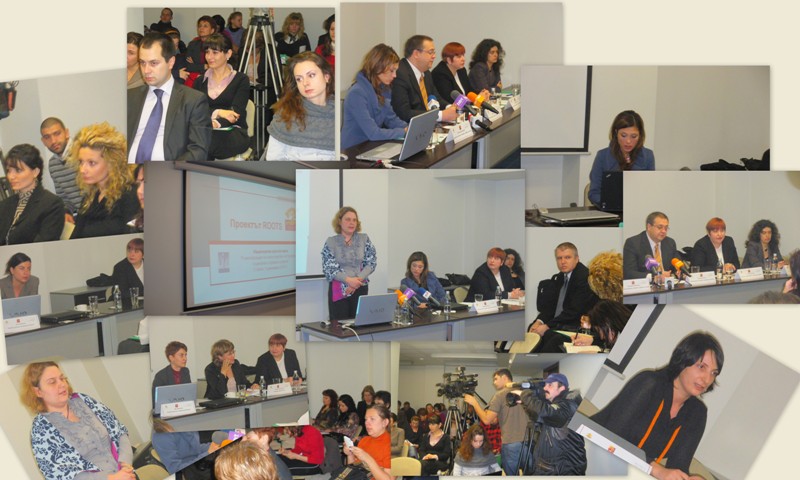
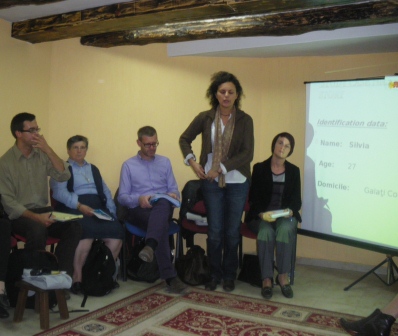
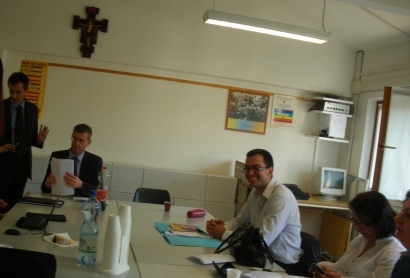
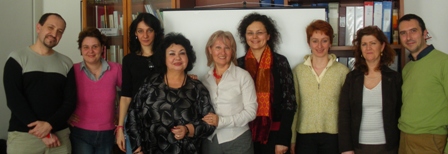
The national conference " Reintegration of victims of trafficking - social and legal aspect" was organized on the 9th of december to disseminate the Roots project results and findings of the final report, elaborated by the working groups on the reintegration of women victims of trafficking in Italy, Bulgaria and Romania. It gathered experts from all stakeholders concerned in Bulgaria - institutions and NGOs working on the reintegration of victims of trafficking to raise the awareness on challenges and difficulties of the process of reintegration in Bulgaria, as well as to give opportunity for sharing of good practices and new initiatives for overcoming difficulties and improving of the reintegration process. The event stressed the close link between inside and outside trafficking of women and prostitution, and raised several questions about attitudes, approaches, legislation and practical work to fight the sexual exploitation. New initiatives announced: The Secretary of the National Commission for Combating Trafficking in Human Beings (NCCTHB) was involved as a key speaker to present the Changes and Challenges for the Institutions in Bulgaria for Combating Trafficking in Human Beings and Reintegration of Victims, especially women and children. She informed the audience about several forthcoming practical steps planned for 2011: e.g. the amendments in the Law on Public Health which will let the victims of trafficking to be re-included in the national health insurance system after interruption of their health insurance rights. The Secretary of the NCCTHB informed that institutions are already working for a repeal of the administrative penalty for victims of trafficking who have been deprived from their personal identity documents. In addition Mrs. Vassileva announced that in 2011 a special fund for NGOs working in the field of reintegration will be launched; one more local commission for combating trafficking in human beings will be established in the town of Rousse and one more state funded shelter for women victims of trafficking will be opened in Bourgas. Link between projects and processes Nadya Kojuharova (Animus Association Foundation) presented the National Referral Mechanism (NRM), developed within the framework of the joint project of Animus Association, La Strada International in partnership with the NCCTHB with the financial support of the МАТРА program. The project aimed to improve the access of victims of human trafficking to humanitarian programmes and service system for protection and reintegration in Bulgaria. It was developed under several phases, starting from research and assessment of potential key participants in the NRM, establishing methodology and developing (model) standards of assistance to trafficked persons. Mrs. Kojuharova presented the NRM, which was officially presemted in Sofia in November 2011, and informed the national conference's participants that being a partner in the Roots and in the NRM project, the Animus Association compared the findings of the two projects which benefited both in terms of analysis of the legislation, barriers and possible solutions for overcoming the obstacles for legal and social reintegration and paths to institutional/NGOs cooperation. Both projects interfered a lot in exploring the process of cooperation between countries of source and countries of destination as well as possibilities for joint efforts to the benefit of the victims. Discussion about the difficulties of the reintegration process in Bulgaria: The national conference opened several hot topic discussions related to the difficulties and problems of the process of reintegration of victims in Bulgaria. The NGOs representatives informed that the process is still very difficult, because most of the victims have never been previously integrated in the local society. Most of them are Roma, have no education or are victims of violence in the family. According to the law the reintegration period in Bulgaria is very short; it is difficult to monitor and evaluate the process. The work on empowerment of the victims has less than desired success. Apart form the lack of finances for long term reintegration, the service providers which are mostly NGOs, are facing the stigma, lack of enough trained social workers and leaders of cases to work with the victims. On the other hand, the NGOs have no human and financial resources to assist the victims to defend their rights in the court. Sharing of good practices: Although the reintegration process is not an easy task, most of the participants were open to share their positive experience and new initiatives for its improvement. Ioana Terzieva (Caritas, Rousse) presented the project JLS/2007/ISEC/486, financed through the EC Prevention and Fight against Crime 2007 Program and implemented in the same time as the Roots project in Bulgaria, Romania and France. She informed that during the project lifetime the Caritas Rousse opened a special bank account for donations in favor of the free legal aid for victims of trafficking. She also presented their innovative public awareness initiatives and campaigns. Galina Kuncheva form the Open Door Center, Pleven, informed about their recent experiences on cases of reintegration and results of the analysis of the social cost of the violence done in the Pleven district in the cooperation with the local authorities and state legal and social institutions. She presented the Open Door's study about the public damage and financial dimension of the violence. The study is focused on the NGOs and institutions' expenses for the protection of victims for 2007 and 2008 in Pleven. The Nadja Center in Rousse shared their experience on insuring humanitarian aid and financial support to victims in cooperation with local donors and local authorities.

|